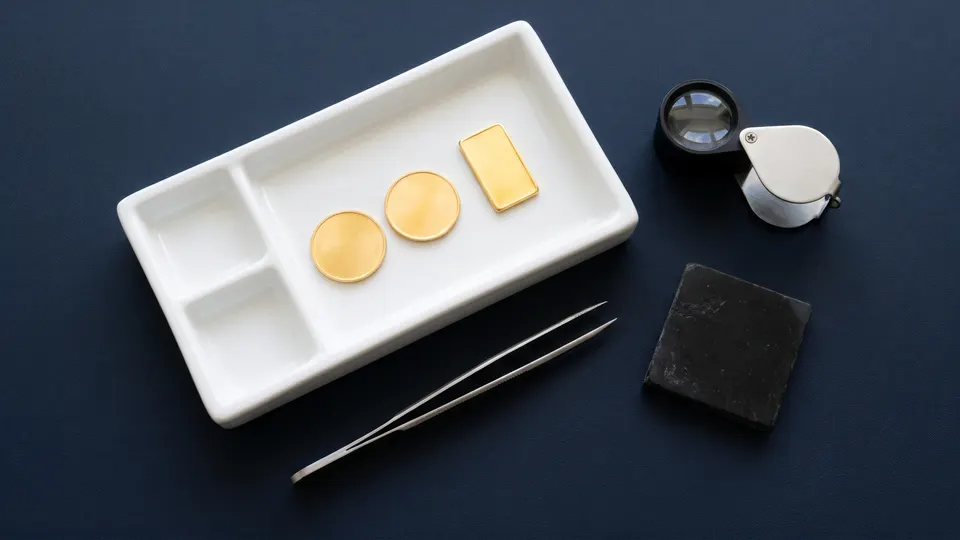
An IRA can hold gold bullion that is at least .995 fine, plus U.S. American Gold Eagle coins, which are allowed by a specific exception in the tax code. Coins such as the American Gold Buffalo and Canadian Gold Maple Leaf meet the fineness rule. The metal must be held by the IRA's trustee or a depository your custodian uses, not at your home.
The collectibles rule, IRC 408(m)
The starting point is section 408(m) of the Internal Revenue Code. If an IRA acquires a collectible, the purchase is treated as a distribution to you, in the amount the account paid for it. The statute's list of collectibles includes any work of art, rug, antique, metal, gem, stamp, coin or alcoholic beverage.
The IRS states the same rule on its Retirement plan investments FAQs page: IRAs cannot invest in collectibles such as art, antiques, gems, coins or alcoholic beverages, and they can invest in certain precious metals only if those metals meet specific requirements. IRS Publication 590-A adds that if a traditional IRA invests in collectibles, the amount invested is considered distributed to you in the year it was invested.
So gold is a collectible by default. It only belongs in an IRA if it fits one of the exceptions in section 408(m)(3).
The two exceptions that let gold in
Bullion at .995 fineness or better
Section 408(m)(3)(B) excludes gold, silver, platinum and palladium bullion whose fineness meets the minimum a regulated futures market requires for delivery. For gold, the reference is the COMEX gold futures contract, which CME Group says must be settled with gold that assays to at least 995 fineness. That is where the familiar ".995" rule comes from: 99.5% pure gold or better.
The exception carries a condition written into the same sentence. It applies only while the bullion is in the physical possession of the IRA's trustee.
U.S. gold coins named in the statute
Section 408(m)(3)(A) excludes certain coins issued by the United States outright, including the gold coins described in section 5112(a)(7) through (10) of Title 31. Those are the 1, 1/2, 1/4 and 1/10 oz American Gold Eagle denominations. Publication 590-A describes this as one, one-half, one-quarter or one-tenth ounce U.S. gold coins.
This matters because the Gold Eagle is 22 karat. The U.S. Mint lists it as 91.67% gold, 3% silver and the balance copper, which is below .995. Without the coin exception it would not qualify. Our page on American Gold Eagle value covers the coin's specs and how it is priced.
Coins that commonly qualify
The U.S. Mint and other government mints publish the fineness of their bullion coins, which makes it straightforward to check a coin against the .995 rule.
| Coin | Issuer | Fineness | Why it can qualify |
|---|---|---|---|
| American Gold Eagle (1, 1/2, 1/4, 1/10 oz) | U.S. Mint | 91.67% | Named in the statute's coin exception |
| American Gold Buffalo (1 oz) | U.S. Mint | 99.99% | Meets the .995 bullion fineness rule |
| Canadian Gold Maple Leaf | Royal Canadian Mint | 99.99% | Meets the .995 bullion fineness rule |
The U.S. Mint calls the American Buffalo the first .9999 fine, 24-karat gold coin it ever struck. The Royal Canadian Mint says the Gold Maple Leaf has been made in 99.99% pure gold since it raised its standard three years after the coin's 1979 launch, in sizes from 1/20 oz to 1 oz.
Other government-issued bullion coins at .995 or higher can fit the same rule. Before buying, check the fineness on the issuing mint's own page, and ask the IRA custodian to confirm it will accept that specific product.
Gold that commonly does not qualify
The South African Krugerrand is the best-known example. The Royal Canadian Mint describes it as a 22-karat coin of 91.67% purity. That is below .995, and since it is not a U.S. coin named in section 408(m)(3)(A), the American Eagle exception does not help it.
Rare and collector coins are the other large group. A coin bought for its rarity, age or grade, such as older U.S. gold pieces struck before the Gold Eagle program, is not among the coins the statute lists, and many fall short of .995 fineness. Gold jewelry and gold-plated items fail the bullion test as well.
If someone suggests a coin is "IRA approved," the test is simple to apply yourself. Either it is one of the American Gold Eagle sizes, or it is bullion at .995 fineness or better. Anything else is treated as a collectible.
Gold bars and accredited refiners
Bars qualify under the same .995 bullion rule. In practice, IRA custodians usually accept bars from refiners whose products meet a recognized market standard, so that fineness and weight can be relied on when the bar is bought or sold.
Two standards come up most often in custodian rules. COMEX, the CME Group exchange, sets the delivery standard for its gold futures contract, including the 995 minimum fineness. The LBMA keeps the Good Delivery List for the London market. To be accredited, a gold refiner has to pass checks on its market history and financial standing, produce at least 10 tonnes of refined gold, hold tangible net worth of at least £15 million, and produce bars that meet LBMA standards for purity and appearance. LBMA monitors refiners on the list and removes those that stop meeting the standards.
Ask the custodian which refiner standards it accepts before you choose a bar.
Why IRA gold can't be kept at home
Search results for "home storage gold IRA" often describe setups where the IRA forms an LLC and the owner keeps the coins in a home safe. The statute and the courts point the other way.
The bullion exception in section 408(m)(3)(B) applies only if the bullion is in the physical possession of a trustee. In its McNulty decision of November 18, 2021, the Tax Court looked at an IRA that bought American Gold Eagles through an LLC the IRA owned, with the coins shipped to the owner's home. The court held that the owner's possession of the coins was a taxable distribution equal to their cost, and it upheld penalties.
The practical rule is that the IRA owns the metal, and a trustee or custodian holds it, usually at a depository your custodian uses. If you take possession, the IRS can treat that as a distribution, which can bring income tax and possibly penalties. For how the account and storage are set up, see how a Gold IRA works; for what storage costs, see Gold IRA fees. Moving money from a workplace plan follows its own steps, covered in 401(k) to Gold IRA rollover. You can also get the free Gold IRA Planning Guide.
Whatever you hold, gold prices rise and fall, and the value of an IRA holding gold can go down as well as up.
Frequently asked questions
What gold is IRA eligible?
Gold bullion that is at least .995 fine qualifies under IRC section 408(m)(3), as long as the IRA trustee holds it. U.S. American Gold Eagle coins in 1, 1/2, 1/4 and 1/10 oz sizes also qualify through a separate exception, even though they are 22 karat. Coins such as the American Gold Buffalo and Canadian Gold Maple Leaf, at 99.99% gold, meet the fineness rule.
Is the Krugerrand IRA approved?
No. The Krugerrand is 22-karat gold at 91.67% purity, which is below the .995 fineness required for bullion. It is not a U.S. coin, so the American Gold Eagle exception in section 408(m)(3)(A) does not apply to it.
Why are American Gold Eagles allowed if they are only 22 karat?
Internal Revenue Code section 408(m)(3)(A) names certain U.S. gold coins, described in 31 U.S. Code section 5112(a)(7) through (10), as exceptions to the collectibles rule. Those are the Gold Eagle sizes. The exception is written into the law itself, so the .995 fineness test does not apply to these coins.
Can I store my Gold IRA metals at home?
Storing IRA gold at home is likely to be treated as a distribution. The tax code's bullion exception requires the metal to be in the physical possession of the IRA trustee, and in its 2021 McNulty decision the Tax Court held that an IRA owner who kept IRA-bought Gold Eagles at home received a taxable distribution equal to their cost.
Can an IRA hold gold bars?
Yes, if the bars are at least .995 fine and held by the IRA's trustee or custodian. Custodians generally accept bars from refiners that meet recognized market standards, such as COMEX delivery standards or the LBMA Good Delivery List. Confirm with the custodian before buying a specific bar.
Sources
- IRS: Retirement plan investments FAQs
- IRS: Publication 590-A, Contributions to Individual Retirement Arrangements (Investment in collectibles)
- Cornell LII: 26 U.S. Code § 408(m), collectibles and the coin and bullion exception
- Cornell LII: 31 U.S. Code § 5112, gold coin denominations
- CME Group: Gold futures contract specs (995 minimum fineness)
- LBMA: About Good Delivery
- U.S. Mint: Bullion coin programs (American Eagle and American Buffalo specifications)
- Royal Canadian Mint: Meet the Mint's bullion coins (Gold Maple Leaf and Krugerrand purity)
- Groom Law Group: IRA checkbook control in the crosshairs (summary of McNulty v. Commissioner, 157 T.C. No. 10)
Take the checklist with you
The free Gold IRA Planning Guide puts the rollover steps, a fee checklist and the questions to ask a custodian in one PDF.