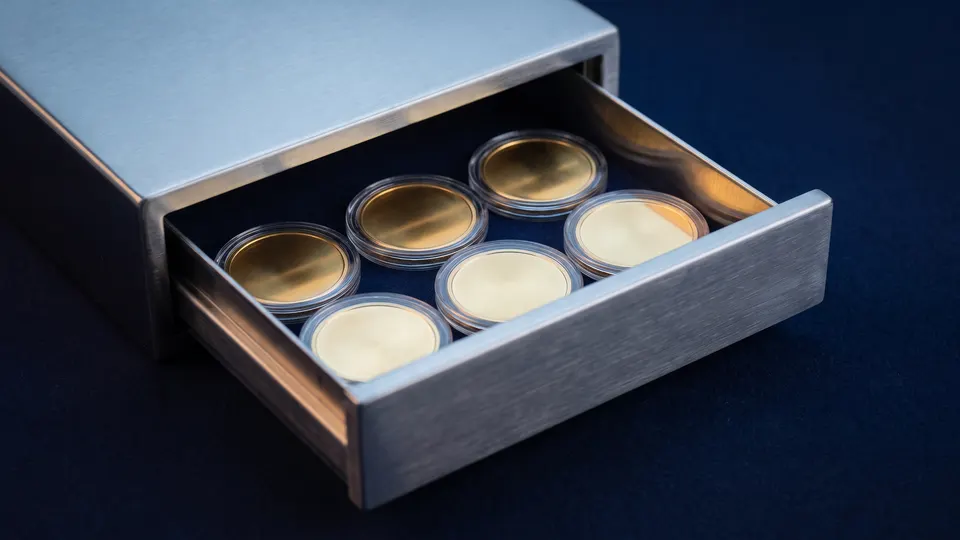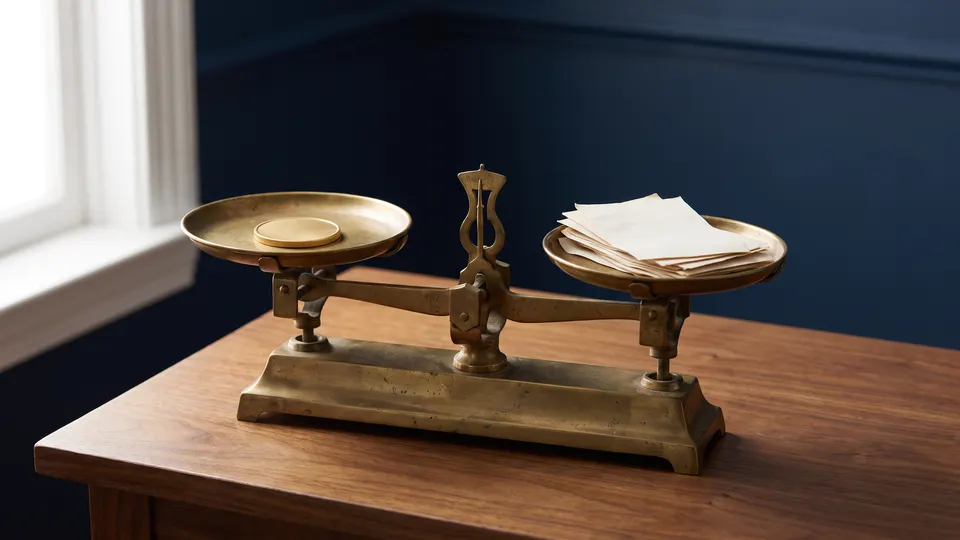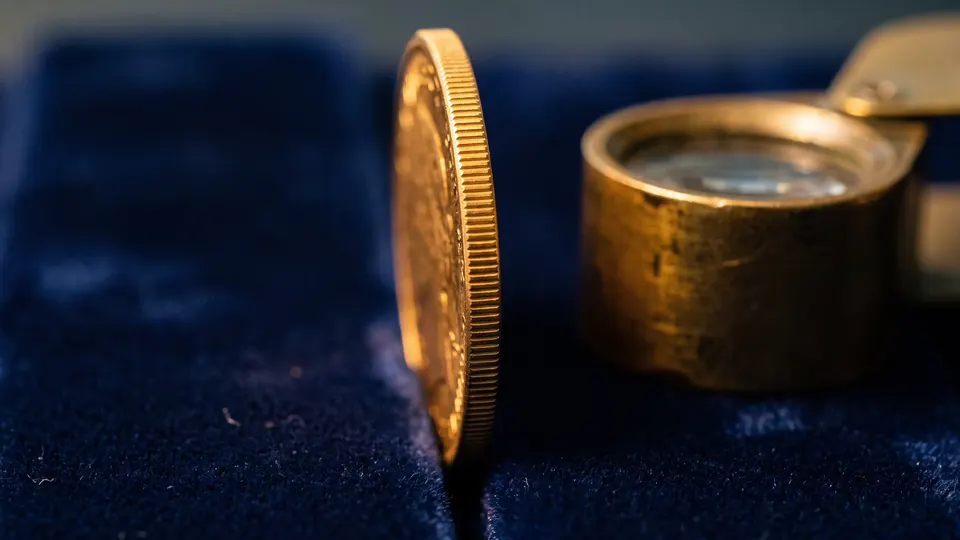
A 1 oz American Gold Eagle is worth roughly the value of one troy ounce of gold at today's spot price, plus a premium that a buyer pays over that amount. The $50 stamped on it does not set its value. To figure it, multiply the coin's gold content by the spot price, then compare any offer to that melt value.
What the U.S. Mint says is in the coin
The U.S. Mint has issued American Eagle gold bullion coins since 1986. Its published specifications are the starting point for any value math:
| Size | Pure gold content | Face value | Diameter |
|---|---|---|---|
| 1 oz | 1 troy oz | $50 | 32.70 mm |
| 1/2 oz | 1/2 troy oz | $25 | 27.00 mm |
| 1/4 oz | 1/4 troy oz | $10 | 22.00 mm |
| 1/10 oz | 1/10 troy oz | $5 | 16.50 mm |
The Mint lists the total weight of the 1 oz coin as 1.0909 troy ounces (33.931 grams) and the 1/2 oz coin as 0.5455 troy ounces (16.966 grams).
The alloy is 91.67% gold, 3% silver and the balance copper. That is the 22-karat standard, which the Mint says it uses because the added metals make a harder coin that resists scratches. The coin holds its full stated amount of pure gold; the silver and copper sit on top of that. This is why the 1 oz coin weighs 1.0909 troy ounces in total while containing exactly one troy ounce of gold.
When you figure value, use the gold content, never the total weight. Weighing a 1 oz Eagle and multiplying the full 1.0909 ounces by the gold price overstates its gold by about 9%.
Melt value: the floor of the math
Melt value is the coin's gold content multiplied by the spot price per troy ounce. Our page on the spot price of gold explains where that number comes from and how bid and ask work.
Here is a worked example. The spot price is hypothetical, a round $1,000 chosen to make the arithmetic easy to follow. Use the real spot price at the time you check.
| Coin | Gold content | Hypothetical spot | Melt value |
|---|---|---|---|
| 1 oz Gold Eagle | 1.0 troy oz | $1,000 | $1,000 |
| 1/2 oz Gold Eagle | 0.5 troy oz | $1,000 | $500 |
| 1/4 oz Gold Eagle | 0.25 troy oz | $1,000 | $250 |
| 1/10 oz Gold Eagle | 0.1 troy oz | $1,000 | $100 |
Notice what happens if you buy four 1/4 oz coins instead of one 1 oz coin. You get the same total gold, and at this hypothetical spot the same $1,000 melt value, but you will usually pay more in premiums, because each small coin costs about as much to strike and handle as a large one.
Premium over spot
The price you pay for a Gold Eagle is melt value plus a premium. The premium covers minting, distribution and the seller's margin, and it changes with demand. Sellers often quote it as a percentage over spot or a dollar amount per coin.
Using the hypothetical $1,000 spot again: if a seller asks $1,060 for a 1 oz bullion Eagle, the premium is $60, or 6% over melt. If the same seller offers to buy it back at $980, you would need the gold price to rise about 8% before you broke even on that coin. These figures only illustrate the math, and real premiums and buyback spreads vary by seller, size and market conditions, and gold prices can fall as well as rise, so you can lose money.
The U.S. Mint does not sell bullion Eagles directly to the public. They reach you through wholesale buyers and then dealers, and each step adds a margin.
Bullion, proof and uncirculated Eagles
The Mint strikes the Gold Eagle in more than one finish, and the finish changes how it is priced.
- Bullion coins are made in large numbers and priced mainly on gold content plus a modest premium. These are the coins people usually mean by "Gold Eagle value."
- Proof coins are collector versions with a mirror-like finish, struck at the West Point Mint with a "W" mint mark. The Mint has produced them since 1986 and sells them directly, at prices well above melt value.
- Uncirculated (sometimes called burnished) coins are also struck at West Point with a "W" mint mark and sold by the Mint as collectibles.
Proof and uncirculated coins hold the same amount of gold as bullion coins of the same size. What you pay above melt is for the finish, packaging and limited production. When you resell, buyers often value them closer to gold content unless a collector wants that specific coin, so the extra premium is not something to count on getting back.
Why the face value doesn't matter
All American Eagle bullion coins are legal tender, and the 1 oz coin is marked $50. The Mint describes the face value as largely symbolic: it shows the coin is official U.S. coinage. One troy ounce of gold has long been worth far more than $50, so nobody spends a Gold Eagle at face value, and face value plays no part in figuring what it is worth.
Condition, year and collector value
For bullion Eagles, the year and condition matter little. A scratched 1 oz bullion Eagle still contains one troy ounce of gold, though some buyers pay a bit less for damaged or heavily handled coins.
Collector pricing follows other rules, because proof coins, low-mintage issues and coins graded by a third-party grading service can sell for more than gold content, and the grade (a numeric score of the coin's condition) drives much of that price. If you think a coin may be worth more than melt for collector reasons, get it looked at by more than one buyer before you sell. If you are buying for a retirement account, collector premiums work against you, because the IRA rules focus on gold content and fineness rather than rarity.
Gold Eagles in an IRA
The Gold Eagle is only 22 karat, below the .995 fineness the tax code requires for gold bullion in an IRA. It is still allowed because of a specific exception. Section 408(m)(3)(A) of the Internal Revenue Code excludes from the collectibles rule the gold coins described in section 5112(a)(7) through (10) of Title 31, which are the 1, 1/2, 1/4 and 1/10 oz Gold Eagle sizes. The coin must still be held by the IRA trustee or custodian, not by you at home. Our page on IRA-eligible gold covers the full rule, and how a Gold IRA works explains the account itself. To compare costs of holding coins this way, see Gold IRA fees, or get the free Gold IRA Planning Guide.
Frequently asked questions
How much gold is in a 1 oz American Gold Eagle?
A 1 oz American Gold Eagle contains one troy ounce of pure gold. The Mint's published specifications list the coin as 91.67% gold, 3% silver and the balance copper, so its total weight is 1.0909 troy ounces (33.931 grams). The extra weight is the silver and copper alloy.
How do I figure the value of a Gold Eagle?
Multiply the coin's pure gold content in troy ounces by the current spot price of gold to get its melt value. A seller will usually charge a premium above that, and a buyer will usually pay at or a little below it. For a 1 oz coin, melt value equals one troy ounce times spot.
Why is a $50 Gold Eagle worth more than $50?
The $50 face value is a legal-tender marking, and the Mint itself calls it largely symbolic. The coin's market value comes from its gold content, which has been worth far more than $50 for decades. Face value does not enter the calculation.
Are proof Gold Eagles worth more than bullion Gold Eagles?
Proof Gold Eagles cost more to buy because of their special finish, packaging and limited production. They contain the same gold as a bullion coin of the same size. When you sell, the extra premium may or may not come back, depending on collector demand.
Can American Gold Eagles go in an IRA?
Yes, they can, even though the Gold Eagle is 22 karat, because Internal Revenue Code section 408(m)(3)(A) specifically exempts these Mint-issued gold coins from the collectibles rule. The coins must be held by the IRA's trustee or custodian, not kept at home by the account owner.
Sources
- U.S. Mint: Bullion coin programs (American Eagle gold specifications)
- U.S. Mint: American Eagle gold proof coin
- U.S. Mint: 2024 American Eagle one ounce gold uncirculated coin
- Cornell LII: 26 U.S. Code § 408(m), collectibles and the coin and bullion exception
- Cornell LII: 31 U.S. Code § 5112, gold coin denominations
- IRS: Retirement plan investments FAQs
- Royal Canadian Mint: Bullion vs. collector coins and premiums
Take the checklist with you
The free Gold IRA Planning Guide puts the rollover steps, a fee checklist and the questions to ask a custodian in one PDF.